

01 / Start
Patient & Request Management
Keep patient identity, visits, laboratory requests, selected tests, priority, and physician or referrer information connected to the transaction.
Explore patient and request tools
Laboratory Information System
LIS-Live brings patient registration, laboratory requests, specimen processing, result encoding, validation, release, reporting, and laboratory oversight into one practical system.
Built for independent laboratories, diagnostic centers, clinics, and hospitals.
Welcome to LIS-Live
Laboratory work crosses registration, requests, sample collection, testing, result encoding, review, printing, records, and reporting.
LIS-Live keeps those activities connected instead of leaving staff to bridge the gaps between paper, spreadsheets, chat messages, and disconnected software.
See how the workflow connects
Core capabilities
Three operational chapters, joined by shared records and visible status.
01 / Start
Keep patient identity, visits, laboratory requests, selected tests, priority, and physician or referrer information connected to the transaction.
Explore patient and request tools
02 / Process
Follow accessions through collection, receipt, rejection, recollection, work queues, structured result entry, abnormal flags, and review.
Follow specimen work
03 / Complete
Move submitted values through independent review and controlled release, then produce print-ready reports, history, activity views, and exports.
See result and report toolsOne connected path
Each stage keeps its place in the operational story—without asking staff to rebuild the context at every handoff.

Built around laboratory work
LIS-Live uses role-based workspaces and permissions so front desk staff, cashiers, medical technologists, laboratory supervisors, administrators, and management can focus on the information relevant to their work.
Configuration and implementation are planned around each laboratory’s approved responsibilities, test catalogue, and operating process.
Why practical implementation mattersSee LIS-Live
A quick look at the thinking, workflow, and experience behind LIS-Live.

Product film 01
See how connected information can support the path from laboratory request to released result.

Product film 02
A closer look at the operational thinking and human experience behind LIS-Live.
Visibility
Role dashboards and work queues make operational status easier to see.
LIS-Live presents current patient, order, specimen, result, cashier, report, and audit information according to assigned permissions. Search and CSV exports help authorized teams locate records and work with operational information.
Explore Features
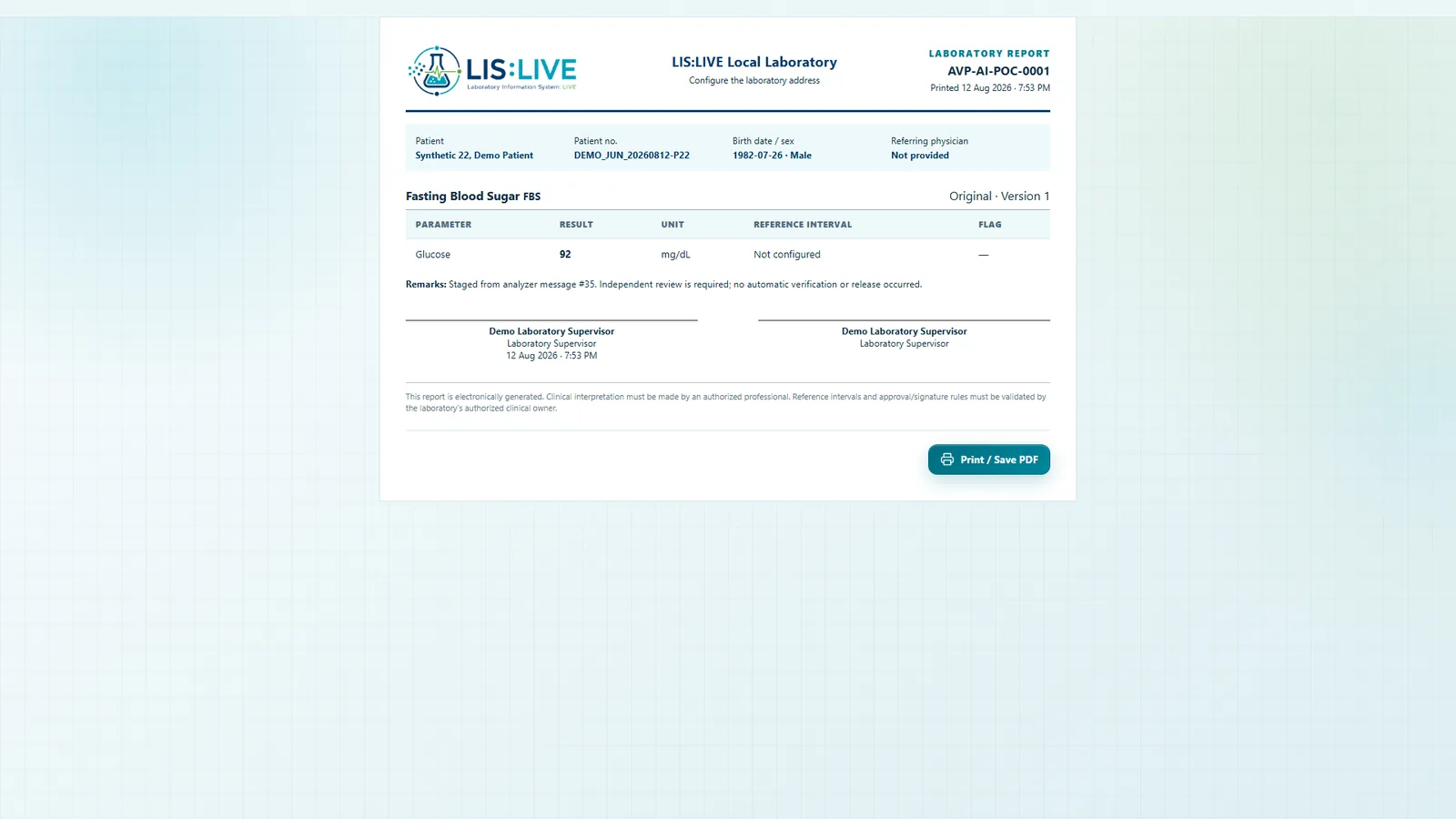
Actual product proof
Real application screens captured from demo and automated QA environments using synthetic records.

Behind every result
Although LIS-Live operates primarily behind the scenes, organizing the laboratory workflow can reduce unnecessary re-encoding, help staff locate records, improve process consistency, and make result processing easier to manage.
It supports the work; clinical interpretation and authorized professional judgment remain with the laboratory.
Good to know
Configuration is a working conversation about how the laboratory operates today and what must be ready for rollout.
Designed to adapt to the laboratory’s approved operational flow, sections, priorities, test catalogue, panels, ranges, and reporting setup.
Built as a web application for a configured server environment. Local-network or hosted deployment can be scoped around infrastructure, access, privacy, and support requirements.
Granular permissions, controlled result transitions, and a structured audit trail help keep sensitive actions attached to authorized responsibilities.
Setup, configuration, data preparation, training, rollout, and continuing support can be scoped with the laboratory.
Who LIS-Live is for

Connect daily work across front desk, specimen processing, results, cashiering, reporting, and management.
Plan a configuration around test services, work volumes, locations, responsibilities, and release processes.
Keep laboratory records and status organized within the clinic’s approved operational model.
Scope the implementation carefully around departments, roles, infrastructure, integrations, and governance.
Start with your laboratory workflow
Tell us about your current process, test volume, reporting needs, and existing systems. We can begin with the workflow before discussing implementation.